The Interplay of Jurisprudence, Ethics, and Society
This book presents a multidisciplinary exploration at the crossroads of the Islamic tradition and biomedicine. Within this broad area of scholarship, this book considers how Islamic theological constructs align with the science and practice of medicine, and in so doing offer resources for bridging the challenges of competing ontological visions, varied epistemic frameworks, and different theologies of life and living among the bodies of knowledge. By bringing together theologians, medical practitioners and intellectual historians, the book spurs deeper conversations at the intersection of these fields and provides fundamental resources for further dedicated research.
What’s inside the book
1: Integrating Religion & Science
Explore the challenge of integrating Islamic theological constructs with biomedical science, inspired by Ghazalian thought on religion and science.
2: Historical Perspectives on Health
Discover the evolution of earth concepts from ancient Greek sources to Islamic interpretations, offering insights into the foundations of Islamic biomedicine.
3: Life and Death in Islam
Delve into Islamic theological views on the meaning of life and death, and their implications for modern medical practice.
4: Bridging Theory and Medicine
Examine how biomedical knowledge intersects with Islamic theology, providing a multidisciplinary framework for understanding health and healing.
The Editors
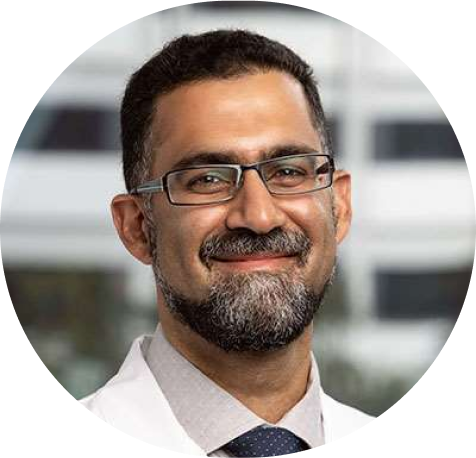
Aasim I. Padela
Dr. Padela is a bioethicist, community health researcher, and emergency medicine clinician. As a multidisciplinary academic scholar, Dr. Padela holds an MD from Weill Cornell Medical College, an MSc in Healthcare Research from the University of Michigan, a BS in Biomedical Engineering, and a BA in Classical Arabic from the University of Rochester. His formal training includes a residency in emergency medicine at the University of Rochester, a health services research fellowship at the University of Michigan, a medical ethics fellowship at the MacLean Center for Clinical Medical Ethics at the University of Chicago, and an Islamic theology & law fellowship at the Oxford Center for Islamic Studies.
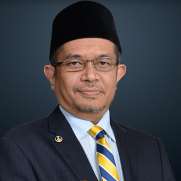
Dr Afifi Al Akiti
Dr Afifi al-Akiti is the Kuwait Fellow in Islamic Studies at the Oxford Centre for Islamic Studies, and teaches in the Faculty of Theology, University of Oxford. He is a Fellow of Worcester College, Oxford. Dato’ Afifi is trained as a theologian in both the Islamic and Western traditions. His areas of expertise are Islamic theology, law, and science. He has worked on several BBC documentaries, including the award-winning Science and Islam (2009). Since 2010, Dato’ Dr Afifi has been listed in The Muslim 500: The World’s 500 Most Influential Muslims.
Know about the Editors
Peter E. Pormann
Ahmed Ragab
Osman Bakar
Peter E. Pormann
Adi Setia
Hamza Yusuf
Asim Yusuf
Mehrunisha Suleman
Rafaqat Rashid.
Omar Qureshi
Kamaluddin Ahmed
Ayman Shabana
Book Reviews
"Islam and Biomedicine accomplishes a major feat by introducing some of the central philosophical issues that
shape the science of biomedicine today and pose challenges for Muslims committed to traditional Islamic
thought and practice. ... Islam and Biomedicine deserves to be read by all Muslims in the field of biomedicine
with interests in deeper theological and philosophical matters."
Aasim Hasany Journal of Islamic and Muslim Studies, Vol. 8 (2), November, 2023
"Islam and Biomedicine, is groundbreaking both in its approach and the invaluable content that it presents. The relevancy of the volume to Islamic ethics is translucent by the above chapter summaries…. Indeed, each chapter opens up the researcher’s horizon by posing significant questions and ends with successful attempts to shed light on the ethical challenges that the Muslim communities face when it comes to advancements in biomedical sciences."
Nasrin Rouzati
Journal of Islamic Ethics, Vol. 7 (1-2), 2023
"The book is undoubtedly the beginning of exciting future works in this area. Islam and Biomedicine contains invaluable contributions to the far-reaching conversation between Islam and science. By bringing together theologians, clinicians, and intellectual historians, the book draws sustained attention to the shared intellectual space of Islam and biomedicine. It provides a foundation for dedicated research at this junction for many years to come."
Irwan Hanish
ISTAC - Journal of The International Institute of Islamic Thought and Civilization, Vol. 28 (1),
2023