• contact@medicineandislam.org
Follow us on:

Integrating PCOR into American Muslim Institutions for Informed COVID-19 Vaccine Decision Making

Overview

Background: Lack of knowledge and capacity for patient-centered outcomes research/comparative clinical effectiveness research (PCOR/CER) limits opportunities for community-based health research in the American Muslim community. It is important for researchers to understand the concerns that American Muslims may have about the COVID-19 vaccines and to work with the community to identify community -driven solutions around vaccines.

Proposed Solution to the Problem: We will leverage tailored resources, e.g., a mosque-based PCOR toolkit; a PCOR and community-based research curriculum, developed by the Initiative for Islam and Medicine (II&M),; and proven expertise, e.g., PCOR and translational public health data analytics, to address knowledge gaps among two new stakeholders in the American Muslim community: Islamic school leaders (i.e., the Islamic Schools League of America [ISLA, which is a leader in supporting Islamic schools] and educators and a prominent social policy research organization (i.e., the Institute for Social Policy and Understanding [ISPU, which is a prominent social policy research organization]. These stakeholders will work with project leads to develop an Islamic school-based PCOR toolkit that can assist Islamic schools in addressing pandemic-related issues, particularly COVID-19 vaccination among American Muslims.

Outcomes:

  • Intermediate-term
  • Adapting the mosque-based PCOR toolkit for Islamic schools
  • Generating a list of potential research projects for stakeholders to partner on around COVID-19 vaccines
  • Developing a concept paper for additional funding of a joint project between stakeholders related to COVID-19 vaccines, to be completed following this project
    • Developing initial proposal on data and research infrastructure needed to sustain future partnerships to conduct PCOR/CER in collaboration with American Muslim institutions, to be completed following this project.
  • Long-term
    • Deepening researchers’ understanding of effective ways to engage with American Muslim institutions
    • Improving health outcomes and decreasing health disparities for the American Muslim community

Objectives:

1

Aim 1:

Engage American Muslim institutions (ISLA and ISPU) that have strong ties to Muslim patients, caregivers, educators, and decision makers using PCOR principles.

2

Aim 2

Build capacity of ISLA leaders for PCOR/CER by adapting the mosque-based PCOR toolkit for usage in Islamic schools and practically implementing this learning in the design of a PCOR/CER toolkit focused on COVID-19 vaccine concerns and informed decision making in the Islamic school setting.

3

Aim 3

Build capacity of ISPU leaders for PCOR/CER by sharing knowledge and skills for setting up data and research infrastructure to conduct future PCOR/CER and practically implement this learning in the design of feasible and practical research projects that focus on delineating disparities in COVID-19 vaccine uptake and promoting informed decision making around COVID-19 vaccines.

Activities:

We will achieve these project aims through a series of virtual and, as allowable, in-person convenings. We will also develop an Islamic school-based PCOR toolkit that can assist Islamic schools in designing PCOR/CER research and addressing COVID-19 pandemic-related issues including vaccinations. We will generate a concept paper based on discussions during the convenings for a joint PCOR/CER project around informed decision making related to COVID-19 vaccines.

Patient and Stakeholder Engagement Plan

American Muslim institutions will be engaged through a series of focused convenings with the overall aim of equipping leaders with the knowledge, skills, and practical insights to effectively conduct PCOR/CER around COVID-19 vaccines in the American Muslim community. These stakeholders will be engaged through online/in-person convenings, pre-convening activities, and participation on the planning committee for the engagement award.

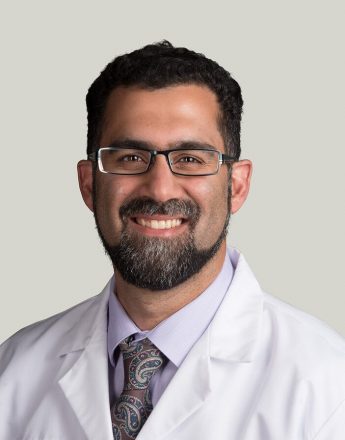
Project Collaborators: This project builds on existing relationships between ISLA, ISPU, and II&M, which were all part of the National Muslim Task Force on COVID-19, and Ayaz Hyder, PhD, from Ohio State University. ISLA provides expertise in education programming and assists with co-learning principles of engagement. ISPU brings a strong research background and social policy lens. II&M is a community-based research and education platform with expertise in PCOR/CER training. Hyder has expertise in community-engaged data analytics and topical expertise in health equity related to COVID-19 surveillance (disparities in the school and community settings), modeling, and vaccination.

Recommendations

  • A more diverse Muslim physician sample experiencing more  discrimination
  • Diversity & Inclusion programming must extend beyond focus on race/ethnicity/sexual orientation
  • Need more research focused on religious identity in minority  physician populations
    and time based-analysis of changes over
    time

Tool Kits

Publications

will be available soon

Presentations

will be available soon

Stay Informed

Subscribe to our monthly newsletter

Error: Contact form not found.

Disseminated Products

comingsoon.jpg
comingsoon.jpg
comingsoon.jpg
comingsoon.jpg

Meet The Team

Videos

Video Title

Video Title

Video Title

Video Title

Gallery

Participation

Funding

Initiative on Islam and Medicine © 2025 - All Rights Reserved. Designed and Powered By Digaptics