Informing American Muslims about Living Organ Donation
Overview
Many studies note that Muslims share health beliefs, values, and experiences that impact healthcare behaviors across ethnic and racial lines. In addition to sharing a theo-centric framework of health and disease, many Muslims look to Islamic ethico-legal guidelines to decide which medical treatments and procedures are permissible.
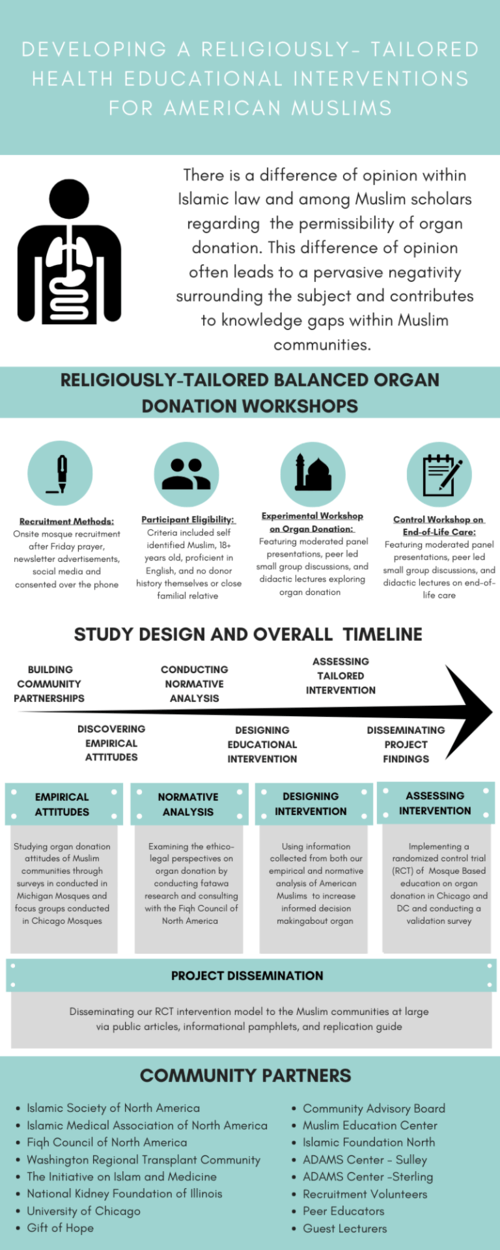
There is a difference of opinion within Islamic law and among Muslim scholars on the permissibility of organ donation contributing to knowledge gaps within Muslim communities. Our project began by seeking to define these knowledge gaps aiding in the design religiously-tailored, peer-led group education workshops conducted in mosques.
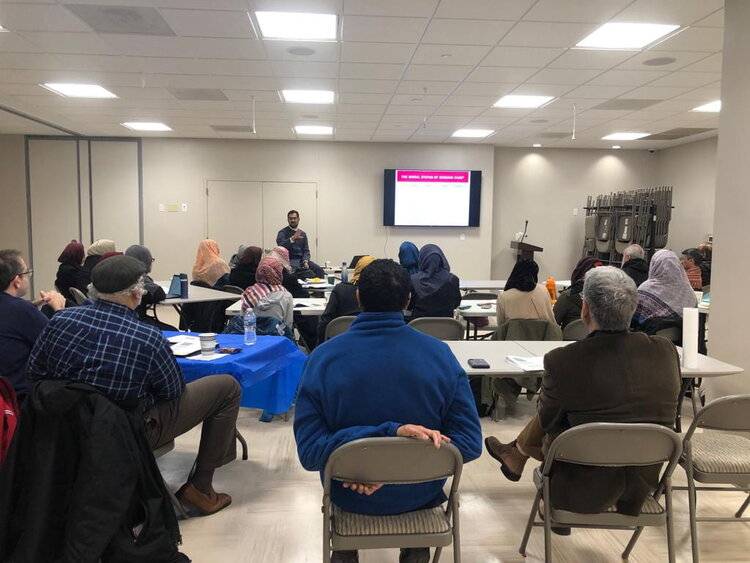
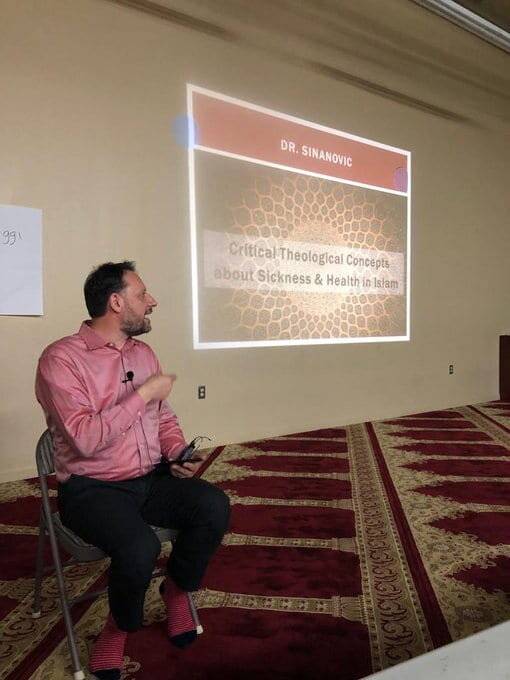
Organ donation and end-of-life care attitudes are impacted by biomedical and religious knowledge gaps. This project aimed to deliver and test the effectiveness of religiously-tailored, mosque-based educational workshops that discuss the biomedical and religious aspects of end-of-life care and living organ donation.
Project Aims
The purpose of developing these workshops was to empower the Muslim community to make informed decisions by:
Understanding the Islamic views for organ donation.
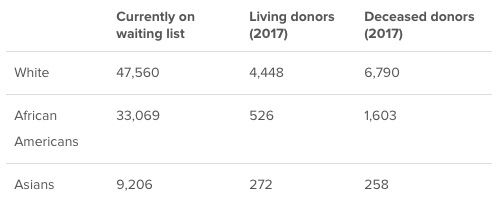
The disparity between supply and demand for life-saving and/or life-sustaining organs is well-known and contributes to over 140 people on the waiting list per week dying in the United States (U.S. Department of Health and Human Services, 2013).The situation for ethnic and racial minorities is even more dire as, not only do biological factors make finding appropriate matches more difficult, organ donors rarely come from such backgrounds (Health Resources and Services Administration).
2017 Organ Donors and Wait-list Recipients Ethnic Breakdown
*Note: there is no specific data on Muslims overall, nor on South Asians and Arabs (Arabs are classified as white in most organ donation research). To view national data reports on waiting lists and donation rates, click HERE.
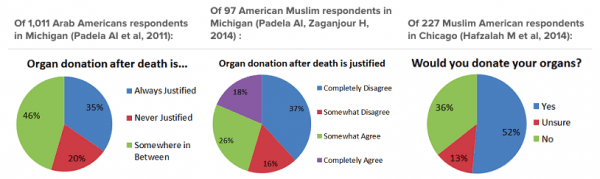
What Are American Muslim Attitudes Towards Organ Donation?
American Muslim attitudes towards organ donation are more negative compared to the general US population which has a > 95% support rate. The gaps can be contributed towards lack of religious and biomedical knowledge to make informed decisions regarding organ donation.
Findings from Community based surveys in Michigan and Chicago
Why End-of-Life Care?
Organ donation and end-of-life care attitudes are impacted by biomedical and religious knowledge gaps. This project aimed to deliver and test the effectiveness of religiously-tailored, mosque-based educational workshops that discuss the biomedical and religious aspects of end-of-life care and living organ donation.