- Latest Newsletter
- Call Us: +(00) 123-345-11
- Email:contact@medicineandislam.org
- contact@medicineandislam.org
II&M successfully concluded workshops, presentations & talks at the
Conference on Medicine and Religion 2024
Sunday April 14th - 16th, 2024
(Indianapolis, Marriot Downtown)

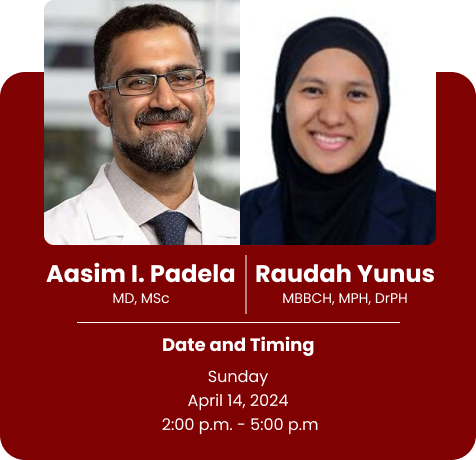
Agenda Workshop
Islamic Bioethics and End-of-Life Healthcare: Navigating Difficult Decisions in the Age of Medicalized Dying
This workshop will provide attendees with insights into the growing field of Islamic Bioethics and cover critical ethical perspectives surrounding end-of-life care such as brain death, withholding/withdrawing life support, and Islamic conceptions of death with dignity. It will also equip participants with heuristics, moral frameworks, and resources to utilize when faced with, or supporting those, navigating the complexities of medicalized dying.
The workshop will utilize didactics as well as group-based case discussions to maximize learning. The case scenario will highlight common decision-points and dilemmas faced by Muslim patients and clinicians drawn from our empirical research and experiences in providing ethical consultation.
Finally, registered participants will receive relevant articles and the slide-deck electronically, and copies of relevant books by the author will be made available for purchase.
Toward Healing and Coherence: Spiritual Writing and a Life in Medicine
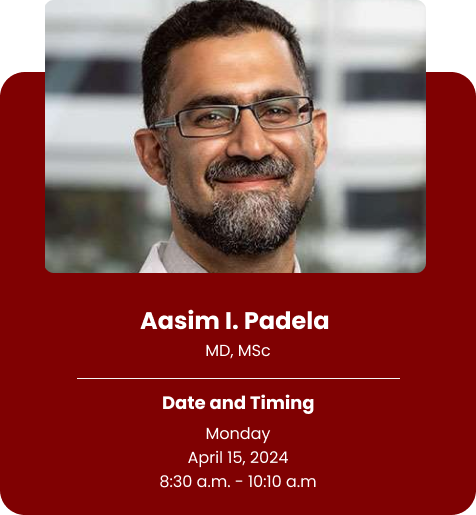
Saints, mystics, and spiritually attuned seekers in (or near) multiple traditions have used writing from a first-person and experiential perspective to reflect on life’s challenges, struggles, and insights, relating those to their deepest metaphysical commitments and/or religious traditions. For those who see the practice of medicine as part of a spiritual journey, writing from a first person, experiential perspective that explicitly engages their religious and spiritual perspectives can help healers heal and help them gain a greater sense of coherence in the fragmented world of modern medicine. In this panel presentation, three physician-writers at various stages of engagement with spiritual writing will reflect on its meaning and role in their life. Daniel P. Sulmasy, a physician and philosopher will reflect on his experience
Saints, mystics, and spiritually attuned seekers in (or near) multiple traditions have used writing from a first-person and experiential perspective to reflect on life’s challenges, struggles, and insights, relating those to their deepest metaphysical commitments and/or religious traditions. For those who see the practice of medicine as part of a spiritual journey, writing from a first person, experiential perspective that explicitly engages their religious and spiritual perspectives can help healers heal and help them gain a greater sense of coherence in the fragmented world of modern medicine. In this panel presentation, three physician-writers at various stages of engagement with spiritual writing will reflect on its meaning and role in their life. Daniel P. Sulmasy, a physician and philosopher will reflect on his experience
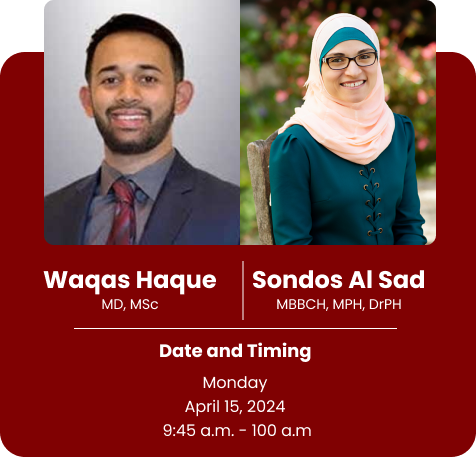
Assessment of Spiritual Well-being in Muslim Patients: A Systematic Review
Background:
Spiritual wellness is increasingly recognized as a component of one’s overall health, and by extension, is tied to a patient’s ability to cope with difficulty and illness. Spiritual assessment tools are used in healthcare settings to better understand patient’s perceptions of a clinical exchange, what a patient expects of their clinical care, and to ultimately enhance the patient-physician relationship. Muslim patients can be marginalized in healthcare settings due to a to a lack of accommodations and understanding of their spiritual needs and practices. Spiritual assessment tools in the literature were predominantly formulated based on sampling non-Muslim patients. Instruments designed based on sampling Muslims’ spiritual well-being offer relevant and accurate grounding to further advocacy and research efforts that optimizes health outcomes. Our systematic review of studies aims to assess the current state of the medical literature on measuring spiritual well-being in Muslim patient populations.
Methods:
We conducted a search on PubMed with the following keywords: ((Spiritual Well-being) AND (scale OR assessment) AND (“muslim” OR “muslims” OR “islam”[MeSH Terms] OR “islam” OR “islamic” OR “islamism” OR “Allah”)). The search was completed for the years 2001 through July 2023. 197 unique studies were identified. The studies were manually reviewed to only include papers measuring personal spiritual well-being or spirituality in a Muslim majority sample. Studies measuring spirituality using non-survey based (e.g. focus groups or interviews) were excluded, as were survey measures related to behavior rather than attitudes (those measuring Muslim religiosity and coping methods). Twenty six studies were included in the final analysis. In our secondary analysis, we examined all unique survey instruments used in the included studies. The survey instruments’ corresponding validation studies were reviewed for context and relevance to Muslim patient populations.
Results:
There were 26 studies examining spirituality and/or spiritual well-being in Muslim patients that fulfilled our study criteria. Among these studies, a total of 12 unique survey instruments were employed. Cancer patients were the most common study population, comprising 14/26 (53.8%) studies. 19/26 (73%) of studies were completed in Iran, with no studies in the United States or other western countries. Of the 12 survey instruments used, the majority (8/12) were originally validated in non-Muslim populations. Except for 2/12 of the survey instruments, all used factor analysis in their original studies.
Conclusion:
Despite the growing amount of literature examining spirituality and spiritual well-being in patients, relatively little attention is paid to Muslim patients with no studies on Muslim patients in the United States. Most survey instruments used to assess spiritual well-being and spirituality among Muslims were not originally validated in Muslim populations, which may mitigate the validity of respective study findings. There is a need for health researchers and spiritual care department affiliated staff to develop spiritual survey instruments rigorously validated and applied to the American-Muslim population.
The Hippocratic Society: Critical Appraisal of Possibilities for Interfaith Collaboration
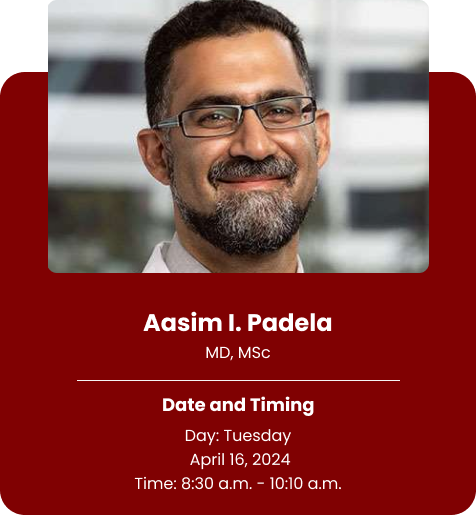
This panel will consider whether a new association, The Hippocratic Society, might facilitate collaboration between Jewish, Christian, Muslim, and other medical practitioners to promote good medicine.
The Hippocratic Society’s mission is to form and sustain clinicians in the practice and pursuit of good medicine.
We believe:
Renewal starts at home.
Today’s medical education largely ignores the task of moral formation, and health care systems often treat clinicians as interchangeable “providers” whose character is largely beside the point. In contrast, we focus on cultivating virtues that characterize good medical practitioners.
Good medicine requires good judgment.
Today’s medical ethics often detaches from the question of what good medicine requires and asks us to set aside clinical judgment in service to patient autonomy and the expectations of third parties. In contrast, we seek to discern and do what good medicine requires, thereby fulfilling our healing profession.
Good medicine is its own reward.
Today’s corporatization of healthcare treats practitioners as interchangeable “providers” who are expected to “just do your job” according to expectations that often have little to do with healing. This has contributed to a crisis of medical morale. In contrast, we embrace medicine as a sacred profession, and we help medical practitioners to flourish in serving their patient’s genuine good.
The Society carries out its mission in two primary ways.
- It promotes the moral and professional formation of its members. Through mutual study, dialogue, and practice, participants train their attention on exemplars of virtues such as courage, generosity, and sincerity, while they practice cultivating such virtues in themselves.
- It sponsors fair, serious, and open discourse about the most important questions facing medical practitioners in our time. Against the tendency in academia to ignore or suppress disagreement and dissent, the Hippocratic Society promotes public dialogue about difficult questions, confident that by reasoning together medical practitioners can discern better how to serve our patients and fulfill our profession.
Our vision: The Hippocratic Society will offer a compelling alternative to the de-moralized status quo of contemporary medicine.
To realize this vision, the Society is working to develop a network that extends to all levels of the medical community. If we succeed, every academic medical center will have an active chapter of the Hippocratic Society offering a ladder of formation from the premedical period to the end of post-graduate training. A dense network of senior clinicians will serve as mentors to trainees, and a parallel network of clinician chapters will support practitioners across the United States and beyond. Through the hippsoc.org portal, participants will access resources that individuals and groups can use to study and grow, dialogue and discern. Members will work within their health care institutions and professional organizations to prioritize patient health, good clinical judgment, and conscientious practices.
The question apropos of the Conference on Medicine and Religion is whether this association can genuinely promote goals that are shared among Jewish, Christian, Muslim, and other clinicians. The Hippocratic Society is not politically or religiously affiliated. It welcomes all who share our commitment to medicine as a healing profession. Importantly, the Society does not ask its members to set aside their moral, political, or religious commitments, and it recognizes that within a shared profession to heal, there is room for distinctive traditions of situating medicine within a well lived life and a well-ordered community.
Nor does the Society take positions on legal and policy issues or on contested bioethical questions, even as it recognizes that clinicians must do so in discerning what good medicine requires of them. To aid such discernment, we foster dialogue regarding important clinical topics. We seek to develop good clinical judgment and to practice conscientiously. We oppose policies that pressure practitioners to do otherwise, and we encourage participants to contend peaceably for good medicine in their own contexts.
Can this posture hold together a coalition of Jewish, Christian, Muslim and other clinicians (including those with no religion) who share a commitment to fulfilling their healing profession? Can it do so without ignoring or minimizing real disagreements about what good medicine entails and without specifying further positions on controversial topics? This interfaith panel will consider these questions. The panel includes four physicians with complementary expertise regarding the intersection of medicine, ethics, and religion; and with individual expertise regarding Judaism, Christianity, and Islam. Two of the physicians are working to build out the Hippocratic Society, one in an academic medical center and one among premedical students at a prominent university.
Initiative on Islam and Medicine © 2025 - All Rights Reserved. Designed and Powered By Digaptics