- Latest Newsletter
- Call Us: +(00) 123-345-11
- Email:contact@medicineandislam.org
- contact@medicineandislam.org
II&M successfully concluded a workshop, presentations & talks at the
Conference on Medicine and Religion — Medicine and Islam
Sunday March 12th - 14th, 2023
(Columbus, Ohio)

Conference Sponsors:





Agenda
Workshop
Islamic Bioethics: What is it? What is it not? And how can it help us in Practice?
Hosted by the Initiative on Islam and Medicine, this three-hour workshop will provide attendees with insights into the growing field of Islamic bioethics. It will also equip participants with practical reasoning tools and heuristics to consider as they engage with ethical issues in clinical practice. In this inaugural year, the workshop will more heavily tilt towards conceptual and discursive foundations of the field so that future iterations can hone in on specific ‘hot’ topics and applied bioethical issues.
The workshop will be divided into a two-part didactic and a group discussion. The didactic will cover the sources of ethical thinking in the Islamic moral tradition and the main actors in Islamic bioethics discourses. The group discussion will revolve around 1 or 2 clinical cases and cover the related extant juridical rulings and moral dimensions of decision-making.
Finally, registered participants will receive relevant articles and the slide-deck, and copies of relevant books by the author will be made available for purchase.
Intended Audience: Physicians, allied health professionals, academic researchers, bioethicists, chaplains, religious leaders and policymakers interested in the intersection of religion, bioethics, and medical practice.
Associations Between Religious Coping and Subjective Health Among Muslim Patients in the United States
Prior studies have attempted to understand the role of both positive and negative religious coping in predicting health status and outcomes (Contrada, 2004; Ironson & Kremer, 2009; Sherman et al., 2009; Tarakeshwar & Pargament, 2001). More recently, The Psychological Measure of Islamic Religiousness (PMIR), the first peer-reviewed religious coping scale for Muslims, has been developed to investigate the mediating role of coping between stress and overall health. Our study is the first to employ the PMIR and examine the relationship between religious coping strategies and subjective well-being for 1,319 Muslim men and women who utilized hospital services in the United States from 2020 to 2021.
Participants provided demographic information and completed measures of positive/negative religious coping, subjective health, and experiences of discrimination. A positive correlation (r= .062) was observed between positive religious coping and better subjective health while a negative correlation (r= -.175) was observed between negative religious coping and lower subjective health. Moderation analysis was also conducted to measure the interaction of sex and discrimination, although these were not significant. The results of this study and its relationship to the wider literature on religious coping are discussed.
Note: This workshop is open to anyone who registers for the Conference on Medicine and Religion, as well as a "stand-alone" at a cost of $50.
- 14 Panels
- 8 Workshops
- 75+ Papers
- Posters
- Small Group Dinners
Talks & Presentations
- Associations between religious coping and subjective health among hospitalized muslim patients in the United States
- Identifying muslim patients’ religious and spiritual needs in the inpatient care setting: a national survey
- Religious identity and medical education
- Factors associated with engagement in advance care planning: a cross-sectional study among american muslims
Events Updates
Conference Highlights
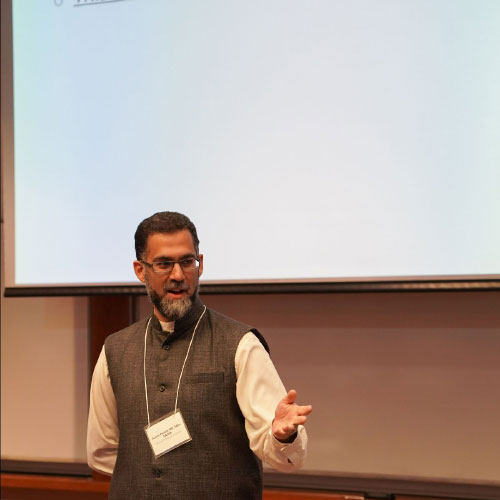
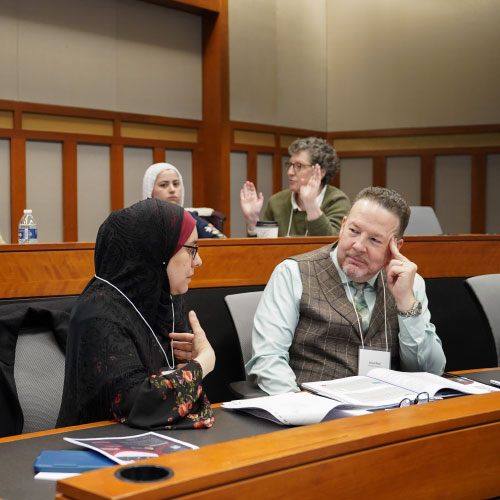
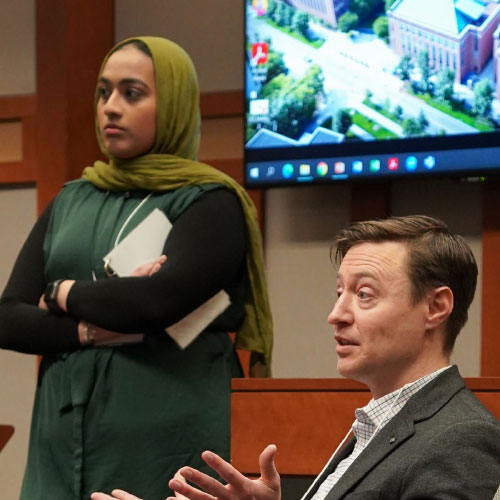
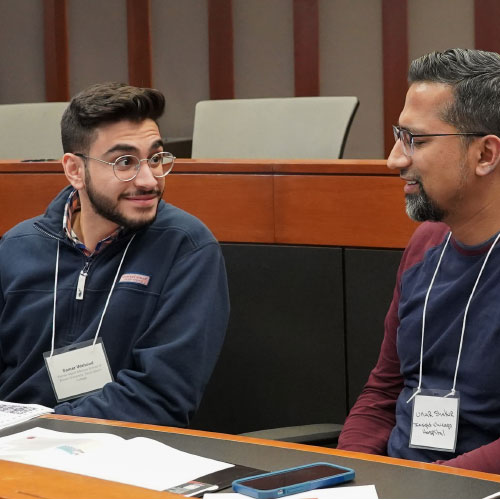
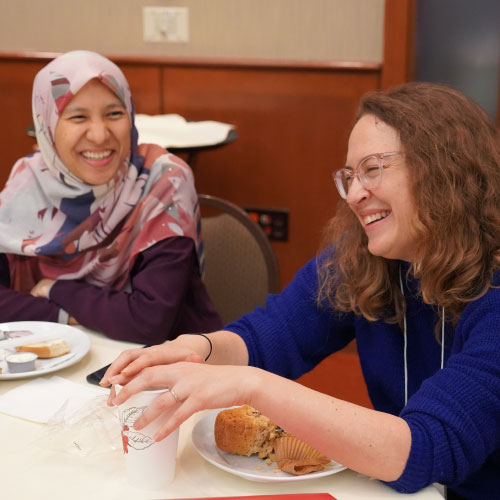
Conference on Medicine
and Religion 2023
ll&M is here for you

Initiative on Islam and Medicine © 2025 - All Rights Reserved. Designed and Powered By Digaptics